How to Train for Mountain Running in Tropical Heat
Running in tropical mountain environments is not simply running somewhere warmer. The combination of heat, humidity and altitude creates physiological demands that catch even experienced runners off guard. Preparing properly makes the difference between a trip that builds you and one that breaks you.
Whether you’re preparing for a trail running retreat in Indonesia, training for a tropical ultra or simply planning to run seriously during a trip to Southeast Asia’s highlands, this guide covers what you need to know. We’ll walk through heat acclimatisation, altitude adjustment, hydration strategy, pacing in the heat and the gear that actually works in these conditions.
The good news: the body adapts remarkably well to tropical running. The adaptations are real, measurable and happen relatively quickly. The key is giving them time to occur rather than forcing pace on day one.
Understanding the Environment
Before getting into training specifics, it helps to understand what exactly you’re preparing for — because tropical mountain running combines two distinct stressors that don’t always appear together.
Heat and humidity drive up core temperature and accelerate sweat rate, increasing cardiovascular demand at any given pace. Your heart works harder to push blood to the skin for cooling while simultaneously fuelling working muscles. The result is a higher heart rate at the same perceived effort — sometimes significantly higher.
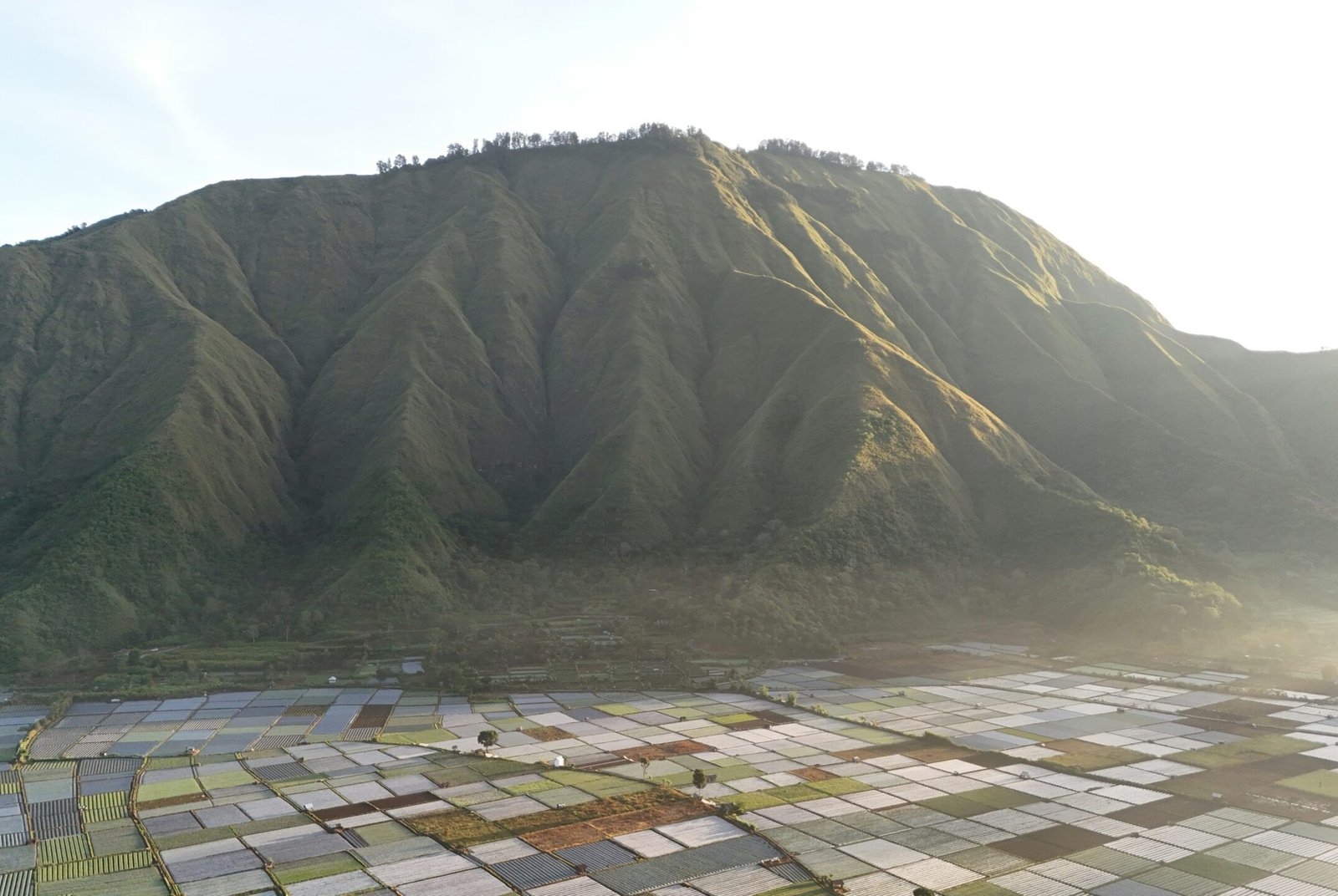
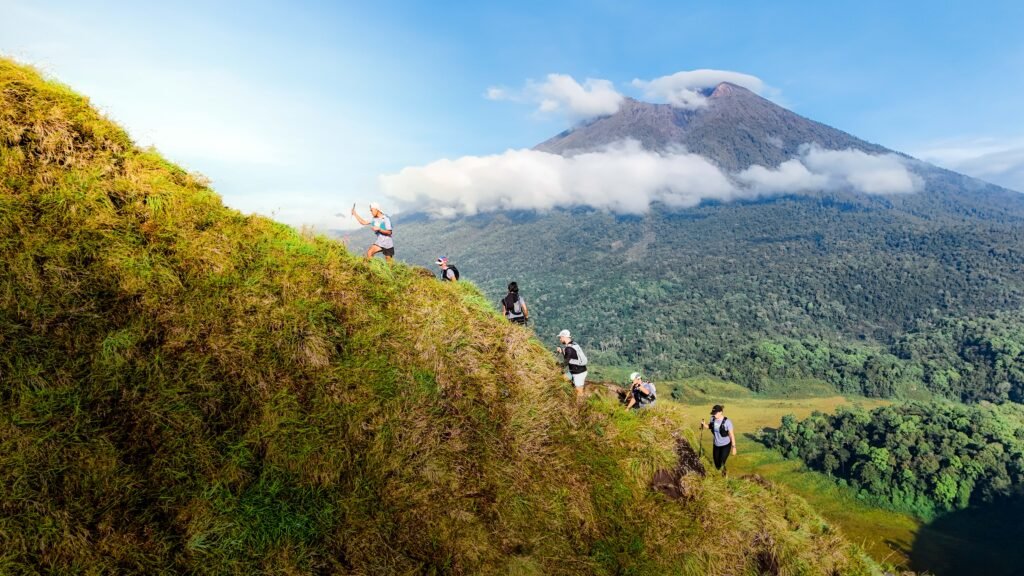
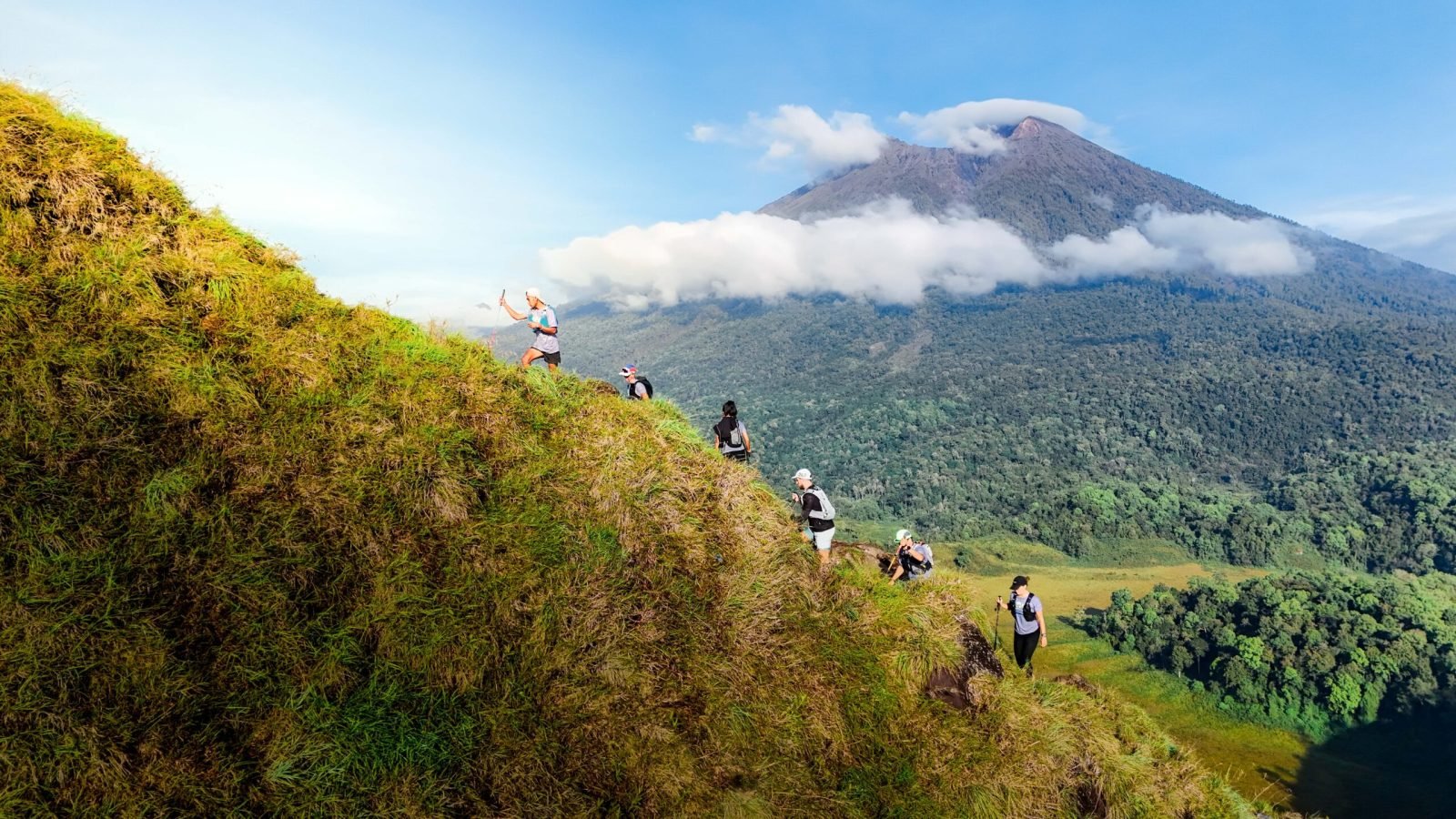
Altitude reduces the oxygen available to working muscles, which at Sembalun’s elevation of 1,100 metres is noticeable but not extreme. At Rinjani’s rim (2,600m) and summit (3,726m), the effect is more pronounced. Altitude and heat together create compounding demands on the cardiovascular system.
The practical implication: if you travel from sea level in a temperate climate to Sembalun and attempt to run at your usual pace on day one, you will struggle. This is not a fitness problem. It is a physiology problem, and it resolves with time.
Heat Acclimatisation: What It Is and How to Do It
Heat acclimatisation is the process by which the body adapts to running in hot, humid conditions. The adaptations are well documented and include increased plasma volume, earlier onset of sweating, reduced sweat sodium concentration and lower core temperature at a given workload. These changes make running in the heat genuinely easier — not just psychologically, but physiologically.
Full acclimatisation takes approximately 10 to 14 days of regular heat exposure. Meaningful partial acclimatisation — enough to make a real difference to your running — occurs within five to seven days.
Before You Travel
If you have two to four weeks before your trip, you can begin heat acclimatisation at home. The most effective method is to run in warm conditions — either outdoors in warm weather or on a treadmill in a heated room. Even 20 to 30 minutes of easy running in warmth, five days a week, will begin the adaptation process.
If you have access to a sauna, post-run sessions of 20 to 30 minutes can support the adaptation process — research does back this up as a useful tool for runners preparing for tropical conditions. But it’s a nice addition, not a requirement. Consistent easy running in whatever warm conditions you have available will get you most of the way there.
The goal before you travel is simple: give your body some exposure to heat. Whether that’s running at the warmest part of the day, doing easy sessions in extra layers, or using a sauna if one is accessible — any regular heat exposure in the two to four weeks before arrival will make your first days in Lombok noticeably easier.
On Arrival
The first two to three days are the most important and the most frequently mishandled. The temptation — particularly for motivated runners who have travelled specifically to train — is to push hard immediately. Resist it entirely.
Most people arrive on the day their retreat begins — and that’s completely fine. The body adapts quickly and your guides will pace the first day accordingly. If you do happen to have a day or two spare beforehand, spending it somewhere warm — coastal Lombok or Bali — is a gentle way to begin adjusting to the climate before heading up to Sembalun. But it’s a nice bonus, not a requirement.
Altitude Adjustment at Sembalun
At 1,100 metres, Sembalun sits at a moderate altitude — high enough to be noticeable, particularly combined with heat, but not high enough to cause serious altitude sickness in healthy, acclimatised individuals.
That said, altitude affects performance, and the effect is greater than most runners expect at this elevation when combined with tropical heat. Expect your aerobic capacity to feel reduced by around five to ten per cent compared to sea level. Pace targets that feel comfortable at home will feel harder here, at least initially.
What to Expect on Higher Ridgelines
Trail running and elevation retreats in Sembalun typically reach between 1,500 and 2,200 metres — high enough to feel the altitude effect, but well within the range where healthy runners adapt without difficulty. You’re unlikely to experience altitude sickness at these elevations, but you will notice the compounding effect of heat and reduced oxygen, particularly in the first few days.
- Expect your aerobic capacity to feel five to ten per cent reduced compared to sea level, especially combined with heat
- Pacing on climbs will need to be more conservative than you’re used to — this is correct, not a sign of poor fitness
- Hydration needs increase at altitude — drink consistently even when you don’t feel thirsty
- Sleep quality can dip in the first night or two at higher elevation — factor this into your energy expectations for early morning runs
Hydration and Electrolytes in Tropical Running
Hydration strategy in tropical running is fundamentally different from temperate climate running. Sweat rates in hot, humid conditions can reach two to three litres per hour during hard efforts — significantly higher than most runners are accustomed to managing.
The consequences of under-hydration in tropical heat are more serious and arrive more quickly than in cooler environments. Heat exhaustion is a genuine risk, not a theoretical one.
How Much to Drink
The current consensus in sports science has moved away from drinking to a fixed schedule and towards drinking to thirst — but with an important caveat in tropical environments: thirst sensation can lag behind actual dehydration, particularly in runners not yet acclimatised to the heat.
In practice, for tropical mountain running:
- Carry at least 1.5 litres for runs up to two hours
- Carry two to three litres for longer efforts or big elevation days
- Drink at regular intervals rather than waiting for strong thirst
- Pre-hydrate well before early morning starts — you’re often already mildly dehydrated upon waking in the heat
- Rehydrate actively after runs, not just during
Electrolytes
In tropical conditions, sodium loss through sweat is significantly higher than in cool-weather running. Drinking water alone without replacing electrolytes can lead to hyponatraemia — dangerously low blood sodium — particularly in runners doing long efforts and drinking heavily.
Electrolyte supplementation is not optional in this environment. Practical approaches:
- Electrolyte tabs or powder in your water bottle on any run over 60 minutes
- Salty food at meals — the local diet in Sembalun tends to be well-seasoned, which works in your favour
- Dedicated electrolyte drinks or sachets for multi-hour efforts and big elevation days
- Consider sodium-containing gels rather than pure carbohydrate gels for long runs
Bring more electrolyte supplies than you think you need. They’re not always available in Sembalun and running low mid-trip is a frustrating and avoidable problem. Pack tabs or powder for the full duration of your stay plus a buffer.
Pacing and Effort Management
The single most common mistake experienced runners make in tropical mountain environments is importing their usual pacing from cooler conditions. Heart rate will run meaningfully higher at the same perceived effort. Pace will drop. Both of these are normal physiological responses, not signs of poor fitness.
The adjustment required is psychological as much as physical: accepting that slower is correct, that a higher heart rate at easy effort is appropriate, and that the goal in the first week is adaptation rather than performance.
Heart Rate-Based Pacing
If you train with heart rate, use it — but adjust your targets upward by around five to ten beats per minute in the first week to account for the heat effect. Your aerobic zones are not wrong; the environment is simply adding a cardiovascular load that shifts the whole system upward.
Alternatively, train entirely by perceived effort and ignore pace entirely for the first three to four days. This is often more liberating and produces better results than fighting a watch.
How the Adaptation Unfolds
In general, expect the first day or two to feel harder than you’d like. Your body is adjusting — to the heat, the humidity, the time zone, the altitude. This is normal and temporary. Most runners find they’re moving well and feeling confident within three to four days, even without any pre-acclimatisation.
The key is to resist the urge to push through on day one. Easy effort in the early days is not wasted training — it’s the training. The adaptation happens during that period, and it pays back later in the trip.
Morning runs before 7am are worth building into your rhythm wherever possible. The air is cooler, the light is extraordinary and you avoid the heat that builds through the morning.
Gear for Tropical Mountain Running
Kit choices matter more in tropical conditions than in most other environments. The wrong gear actively degrades your performance and comfort; the right gear makes a meaningful positive difference.
Footwear
- Drainage matters. Tropical trails are often wet — river crossings, morning dew, afternoon rain. Shoes with drainage ports or mesh uppers that dry quickly are strongly preferable to waterproof shoes, which trap water and cause maceration
- Lug depth and pattern should suit volcanic soil — moderate to aggressive lugs for mixed terrain. Too fine and you lose grip on loose volcanic scree; too aggressive and they clog in wet clay
- Fit is critical. Feet swell in heat. Shoes that fit perfectly in a cool climate may feel tight by midday in Sembalun. Try footwear in warm conditions before the trip if possible
- Bring two pairs if your trip is longer than four days — alternating pairs dries them properly and extends the life of both
Clothing
- Lightweight, moisture-wicking fabrics — merino or technical synthetics, not cotton under any circumstances
- Sun protection is non-negotiable: UPF arm sleeves, a running cap with a wide brim, high-factor sunscreen applied generously and re-applied during long runs
- A lightweight insulation layer for pre-dawn starts and summit days — temperatures at Rinjani’s crater rim can drop to single figures even in the dry season
- Buff or neck gaiter for dusty savanna trails in dry conditions
Running Pack and Hydration
- A running vest with a minimum 1.5 litre hydration capacity — soft flasks preferable to bladders for easier refilling and monitoring of intake
- Waterproof phone case or a dry bag for electronics — afternoon rain is common even in the dry season
- A headtorch with reliable battery life — early starts are the norm and trails are unlit
Blister formation accelerates dramatically in tropical humidity. Merino or technical synthetic socks specifically designed for trail running are worth the investment. Pack more pairs than you expect to need — drying time is longer in humid conditions and you’ll want dry socks every run.
Recovery in the Heat
Recovery between sessions in tropical environments requires more deliberate management than in cool climates. The body is under continuous thermoregulatory stress even at rest, which means baseline physiological load is higher and recovery is slower.
Key recovery principles in tropical running environments:
- Sleep is your most important recovery tool. Aim for at least eight hours. Heat can disrupt sleep quality — a fan, cool shower before bed and hydration before sleeping all help
- Eat enough. Appetite often suppresses in heat, but caloric needs remain high during a training trip. Prioritise carbohydrate-rich local food and don’t skip meals
- Build in full rest days. Multi-day running in heat and altitude is more taxing than the distances suggest. A rest day in the middle of a trip is not wasted time — it’s an investment in the quality of the days that follow
- Cold water immersion — river pools, cold showers — accelerates recovery and feels extraordinary after a hard morning in the heat
- Watch for heat illness signs: persistent headache, nausea, confusion or a cessation of sweating during exercise are all signals to stop, cool down and seek shade and water immediately
Train in Lombok with Elevation Lab.
Our trail retreats and elevation expeditions are designed around intelligent progression in Lombok’s volcanic highlands — local guides, full logistics, and structured days that build you rather than break you.
Explore Our Retreats