The Ultimate Trail Runner’s Guide to Lombok, Indonesia
Lombok sits quietly in the shadow of Bali, just 35 kilometres to its east. But for trail runners, hikers and anyone who moves through landscapes on foot, it offers something Bali simply cannot: raw volcanic highlands, rolling savanna ridgelines, ancient rice fields and a trail network that has barely been touched by the running world.
This is not a polished, over-touristed destination. The trails here are real. The climbs are serious. The heat is not forgiving. And the rewards — views from the rim of Rinjani, lone runs through knee-high savanna grass at sunrise, descents through jungle paths where you won’t see another runner all day — are unlike anything else in Southeast Asia.
This guide covers everything a trail runner, hiker or adventure traveller needs to know about running and exploring Lombok on foot. We’ll walk through the key trail areas, what to expect from the terrain, the best time to visit, and how to make the most of your time in the highlands.
Why Lombok for Trail Running?
Most trail runners who visit Lombok come for Rinjani — and with good reason. At 3,726 metres, it’s the second highest volcano in Indonesia and one of the most dramatic summit experiences in the region. But Rinjani is only part of the story.
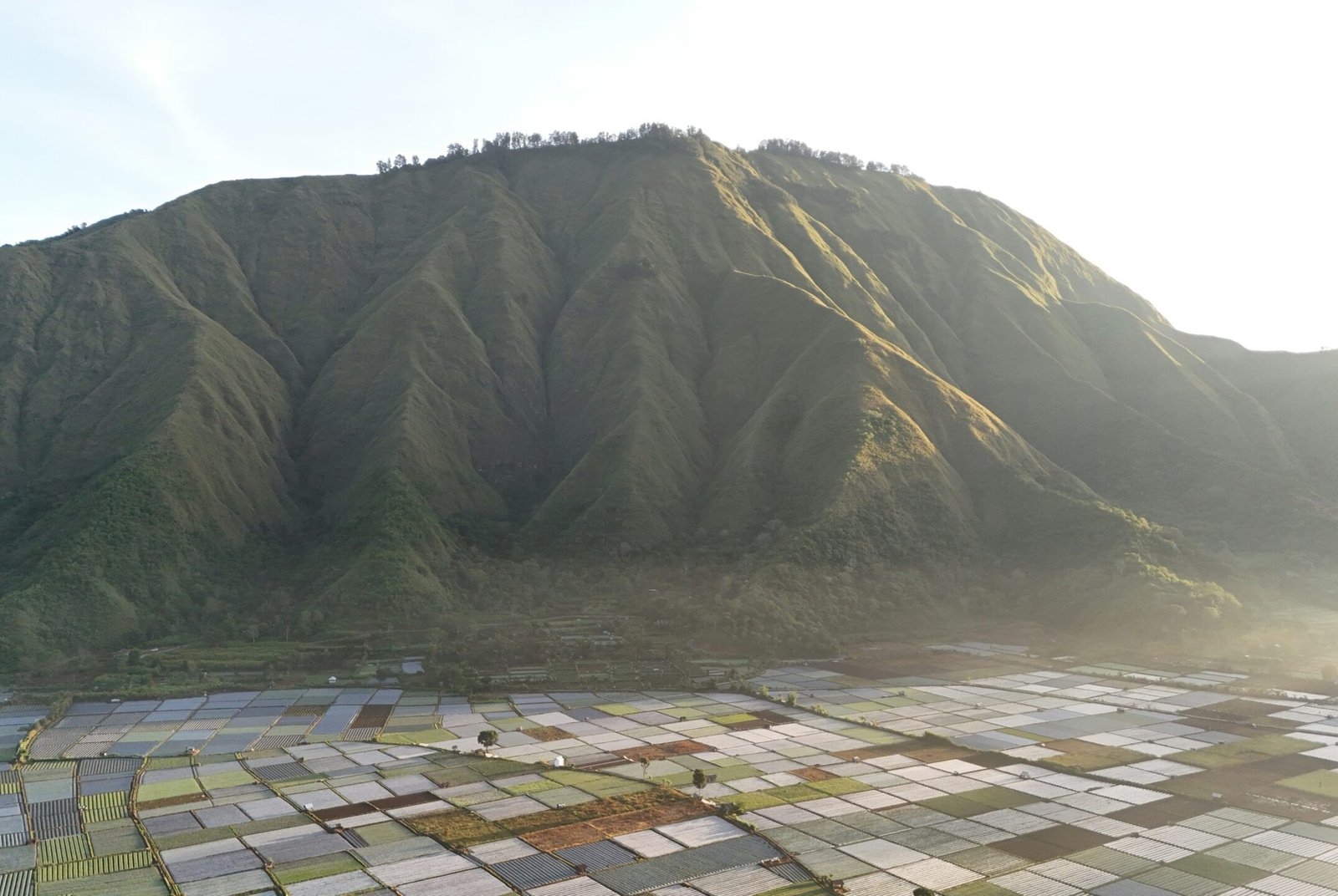
The greater Sembalun valley, which sits at around 1,100 metres above sea level on Rinjani’s eastern flank, is the real base of operations. It offers a rare combination of high-altitude training terrain, accessible trail variety and a landscape that shifts from open savanna to dense montane forest to technical ridgeline within a single run.
What makes Lombok genuinely special for trail runners:
- Altitude training at 1,000–3,700m without the extreme cold of Himalayan or Andean destinations
- Minimal trail traffic — you will routinely run routes without seeing another person
- Technical terrain variety from runnable savanna to exposed ridge scrambles
- A warm, welcoming local culture with deep connections to the mountain
- Year-round running season (with some seasonal considerations — more on that below)
- Proximity to Bali for international connections, without Bali’s crowds
It’s also worth saying plainly: Lombok is not yet on the trail running map in the way that destinations like Chamonix, the Dolomites or even Chiang Mai are. That’s precisely what makes it worth going now.
The Terrain: What to Expect
Lombok’s trail terrain is varied, demanding and — in places — genuinely beautiful in ways that are difficult to describe until you’re standing in the middle of it.
Here’s a breakdown of the main terrain types you’ll encounter:
Savanna Ridgelines
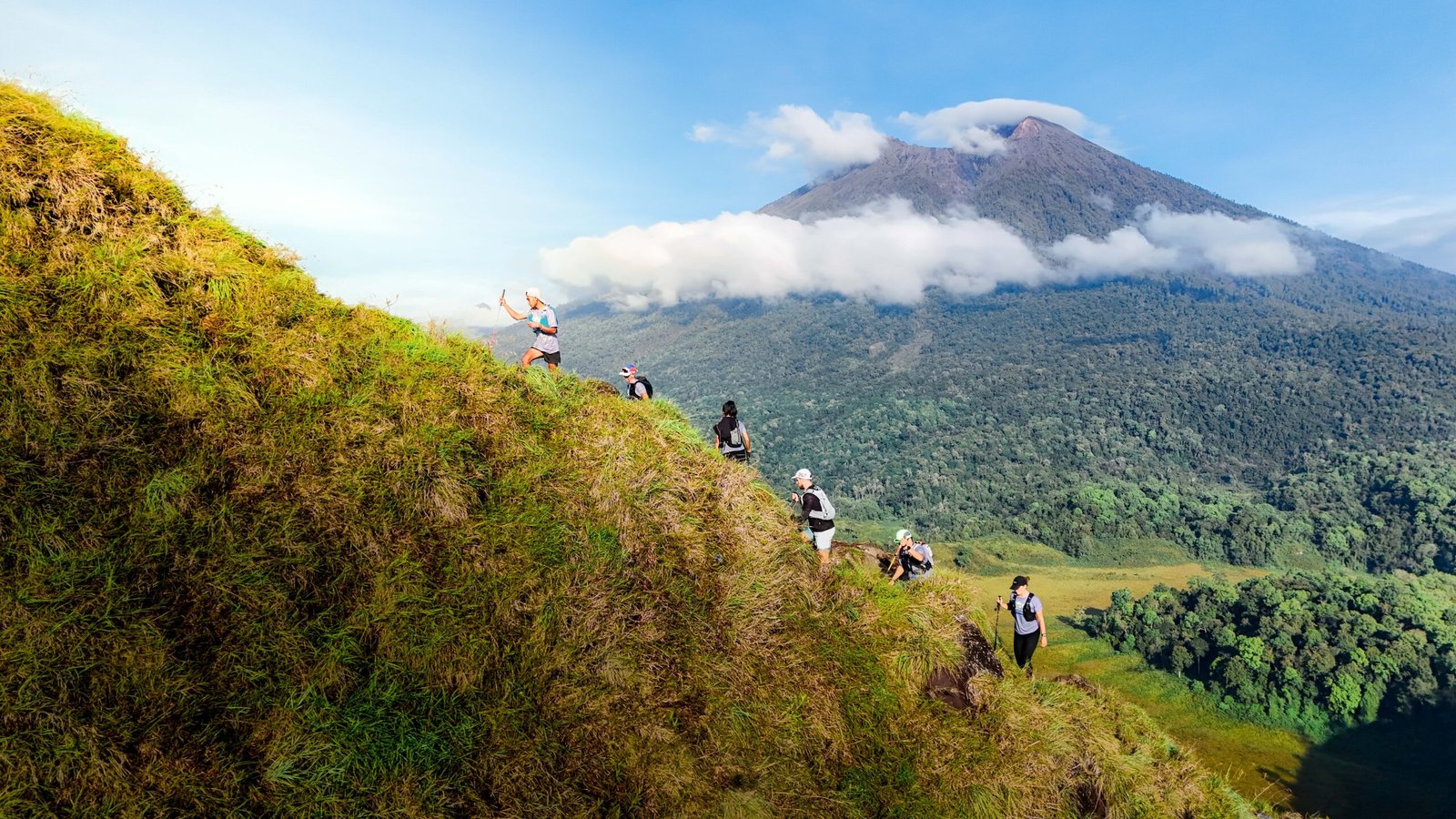
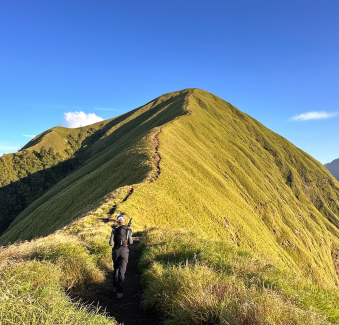
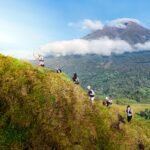
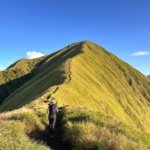
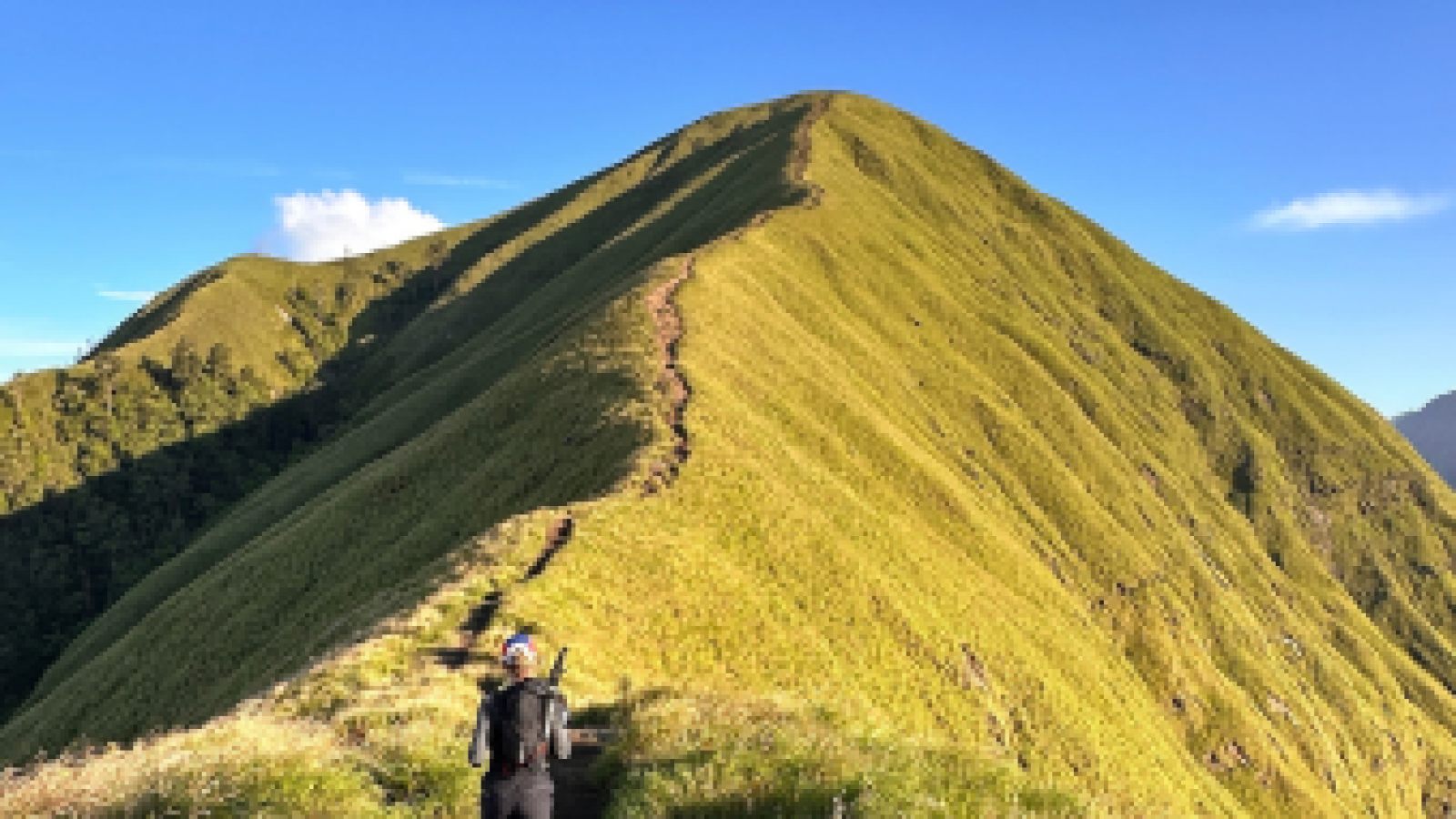
The Sembalun highlands are dominated by open savanna — wide, rolling grasslands that extend across Rinjani’s lower slopes. The trails here are runnable, with manageable elevation and wide sightlines. On a clear morning, you can see the summit cone from the trail, the valley floor below you and the coast in the distance.
This is the terrain that surprises most people. They expect dense jungle. They get something closer to the Scottish Highlands, but warmer, with a volcano in the frame. It’s extraordinary running.
Savanna trails are suitable for all ability levels, though the heat and altitude demand respect even on moderate days.
Rice Field Tracks
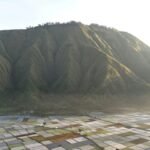
Drop down from the highlands and you enter a different world. Lombok’s rice field tracks — narrow paths threading between paddies, water channels and traditional farming villages — are some of the most peaceful running terrain on the island.
These routes are flat to gently rolling, technically easy and culturally rich. You’ll pass through working farmland, encounter local farmers, and run routes that have been walked for generations. They’re ideal for recovery runs, easy exploration days or introducing less experienced runners to the island’s character.
The rice fields around Sembalun and the lower valley are particularly scenic, especially in the wet season when the paddies are full and brilliantly green.
Waterfall Trails
Several of Lombok’s best trails lead to or through waterfalls hidden in the jungle below the highland rim. These routes tend to be more technical — root-covered, slippery in wet conditions, with river crossings — and reward runners willing to slow down and move carefully.
The jungle sections are humid and dense, with the trail often disappearing into undergrowth before re-emerging on the other side. Navigation awareness matters here. These are not routes to run alone without local knowledge.
The payoff is significant: cold, clear water falling through rainforest canopy, often with no one else around. It’s a very different run from the open savanna, and both are worth experiencing.
A note on navigation: Lombok’s trails are not extensively waymarked. Many routes are known to local guides but don’t appear on standard mapping apps. Running with a local guide is strongly recommended, particularly for anything beyond the well-worn main tracks. This is not a limitation — it’s part of what keeps the island’s trail network genuinely wild.
Key Trail Areas
Sembalun Valley
All levelsThe most accessible and rewarding trail running terrain on the island. Runnable surfaces, consistent elevation, and unobstructed views of Rinjani’s summit make this the go-to for both first-timers and experienced mountain runners looking for big kilometres in stunning surroundings. Sunrise runs here are exceptional.
The valley floor around Sembalun Lawang and Sembalun Bumbung offers easy, flat running through traditional farming landscapes. These routes are ideal for recovery days between bigger efforts, or as a first introduction to running in Lombok. The local community is warm and welcoming to runners moving through.
Jungle & Waterfall Routes
Intermediate — AdvancedDense jungle trails descending through Rinjani’s lower slopes to hidden waterfalls. Technical underfoot, often slippery and demanding careful footwork. Not suitable for running alone — local guide essential. One of the most memorable trail experiences on the island for those willing to move at a controlled pace through challenging terrain.
Running in the Heat: What You Need to Know
Lombok sits just 8 degrees south of the equator. The heat is real, and it will affect your running — particularly in your first few days on the island.
Temperatures in Sembalun are more moderate than the coast thanks to the elevation, but you’ll still be training in conditions significantly warmer and more humid than most European or Australian highland environments. Expect 25–32°C during daylight hours, with humidity that makes the felt temperature higher.
A few principles that experienced tropical trail runners follow:
- Start early. Most guided runs in Sembalun begin before 6am. The light is extraordinary, the air is cooler and you avoid the heat of the mid-morning climb.
- Hydrate aggressively. You will lose significantly more fluid than you’re used to. Electrolyte supplementation is not optional in this environment.
- Adjust your pacing. Your heart rate will run higher at the same perceived effort. Don’t fight it in the first few days — acclimatise, then push.
- Protect your feet. Tropical humidity accelerates blister formation. Tested socks and well-fitted shoes matter more here than in cooler climates.
- Build in recovery. Multi-day running in heat and altitude is more taxing than the distances suggest. Rest days are productive days in Lombok.
Most runners find that after two to three days their body adapts significantly and they’re running well. The first day is often the hardest. Give yourself time.
When to Visit
Lombok has two distinct seasons, and timing your visit correctly makes a significant difference to your trail running experience.
Dry Season: April to October
The prime running season. Trails are dry and firm underfoot, the savanna is golden and the summit views are at their clearest. July and August are the peak months — the best weather but also the busiest period on Rinjani’s main trekking routes. For trail running specifically, the shoulder months of April–May and September–October offer excellent conditions with fewer people on the mountain.
Wet Season: November to March
Running is still possible, and the landscape is dramatically green — the rice fields in particular are at their most vivid. Waterfall routes are at full flow. However, trails become slippery and technical terrain demands significantly more caution. Some routes become inaccessible after heavy rain, and Rinjani’s upper slopes are often cloud-covered. Experienced trail runners visiting in the wet season will still find excellent running — it simply requires more flexibility and local knowledge.
Elevation Lab. runs retreats from April through to December, with the core schedule concentrated in the dry season months. If you’re planning around a retreat, the April–October window gives you the best combination of trail conditions, weather and summit visibility.
Getting to Lombok
Lombok is well connected by air from Bali (a 25-minute flight) and has direct connections from several Indonesian cities including Jakarta, Surabaya and Makassar. The international airport (Lombok International Airport, LOP) also receives some direct international flights.
From the airport to Sembalun is approximately two to two and a half hours by road, winding up through the foothills to the highland valley. The drive itself is worth the time — the landscape changes dramatically as you climb.
Most runners travelling to Lombok will fly into Bali first and take a short connection. Bali to Lombok flights operate multiple times daily and are inexpensive. It’s worth building a buffer day in your travel itinerary — connections can be tight and a delayed first day is a frustrating way to start a trail running trip.
What to Pack
Packing for trail running in a tropical volcanic highland requires slightly different thinking from a European alpine trip. Some principles:
Footwear
- Trail shoes with drainage ports or quick-drying uppers — your feet will get wet
- Moderate to aggressive lugs for volcanic soil and jungle terrain
- One pair of lightweight camp or travel shoes for rest days
Clothing
- Lightweight, moisture-wicking run kit — avoid heavy fabrics
- A lightweight insulation layer for early morning starts and higher elevations
- Sun protection is non-negotiable: arm sleeves, hat, high-factor sunscreen
- Buff or neck gaiter for dusty savanna trails
Hydration & Nutrition
- A running vest or pack with at least 1.5 litres capacity
- Electrolyte tabs or powder — bring more than you think you’ll need
- Trail food that handles heat well (gels and bars melt; rice-based foods work better in tropical heat)
Kit List Essentials
- Headtorch with spare batteries — early starts are the norm
- Basic first aid kit including blister treatment
- Waterproof phone case or dry bag for electronics
- Cash in Indonesian Rupiah — card acceptance is limited in Sembalun
Running Safely in Lombok
Lombok’s trails are wild in the best sense. That wildness comes with responsibilities.
Solo running on unmarked jungle or technical ridgeline routes is not recommended. Not because the mountain is inherently dangerous, but because the combination of heat, altitude, minimal mobile coverage and poorly mapped trails creates real risk for anyone moving alone without local knowledge. This is a mountain environment that commands respect.
Running with local guides is not a concession to inexperience — it’s the intelligent choice. The guides who work Rinjani’s trails have spent years on the mountain. They know the safe lines, the weather patterns, the water sources and the evacuation routes. That knowledge is genuinely valuable and not something that can be replicated with a GPS device and an offline map.
Key safety principles:
- Always inform someone of your planned route and expected return time
- Carry more water than you think you need — heat exhaustion is a real risk
- Turn back at the first sign of rapidly changing weather on exposed ridgelines
- Never attempt technical terrain in wet conditions without local guidance
- Travel insurance that covers mountain rescue and evacuation is essential
The Broader Experience: Beyond the Trail
Lombok rewards curiosity beyond the running. Sembalun is a highland farming community with deep cultural roots — the Sasak people who have lived here for generations have a relationship with Rinjani that predates any trail running movement. Taking time to understand that relationship adds a dimension to the experience that a purely athletic trip misses.
The food in Sembalun is excellent — simple, fresh and prepared with local produce from the valley. Eating well is part of recovering well. The coffee, grown at altitude in the surrounding hills, is worth knowing about.
And the evenings, when the mountain is clear and the stars over the highland valley are unobstructed by light pollution, are something runners who stay long enough tend to remember.
Lombok is a place that gives back in proportion to the effort you bring. Come prepared, move with respect, and it will surprise you repeatedly.
Experience Lombok with Elevation Lab.
We run trail retreats, elevation expeditions and custom adventures in the volcanic highlands of Lombok. Local guides, full logistics, and experiences built around the island’s most extraordinary terrain.
Explore Our Retreats